What to consider before selling a house that needs repairs
Selling a house that needs major repairs is possible, but the work can affect who can buy it, how long the sale takes, and what you ultimately net.
This guide walks through the risks and the numbers to consider before you choose a selling path.
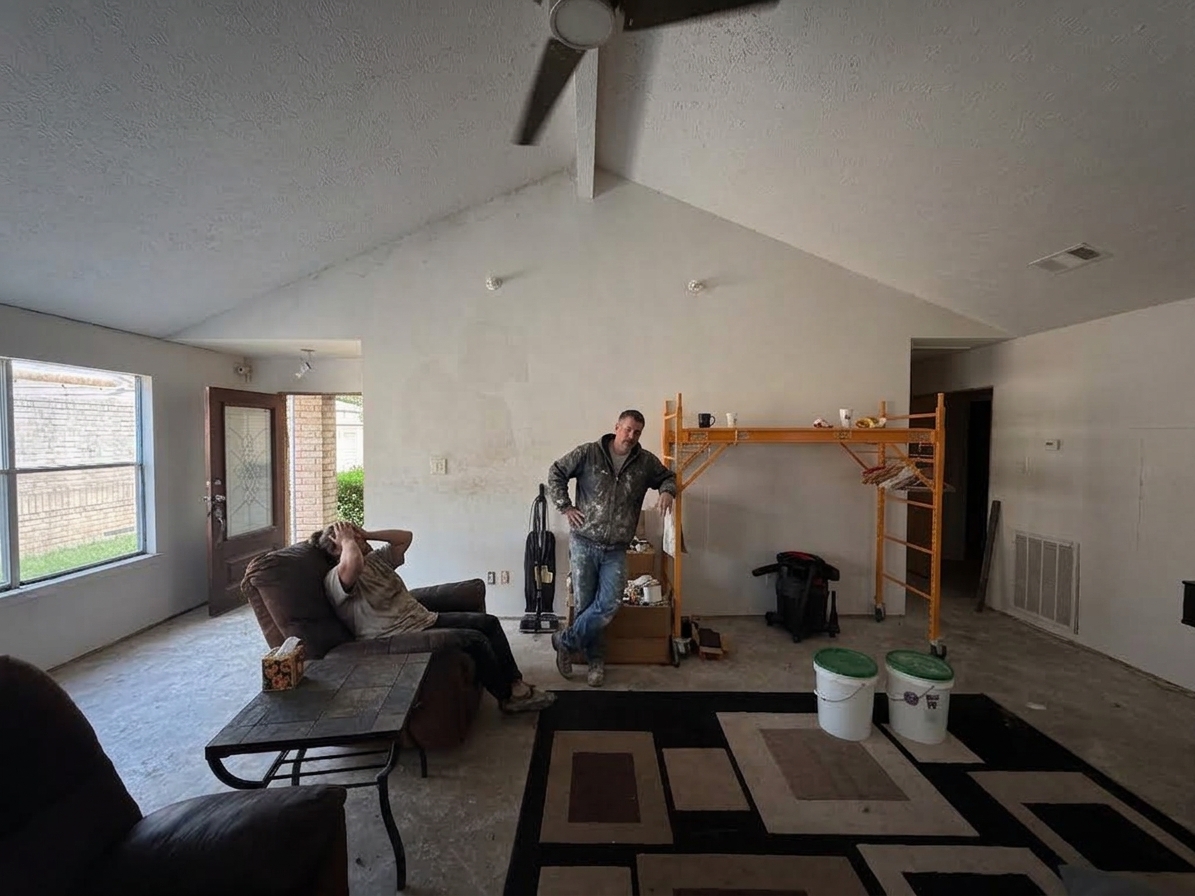
- Selling as-is may make more sense when the additional price you could get after repairs does not outweigh the money, time, and risk required to achieve it.
- Major roof, foundation, structural, electrical, plumbing, or moisture problems can affect more than price. They may narrow the buyer pool or create financing and insurance issues.
- Tax value is not a sale comp. Estimate the home’s repaired market value from comparable sales, then subtract what it will actually cost to get there.
- Compare your net, not just the potential sale price: sale price minus repairs, agent fees, closing costs, and carrying costs.
- Inspections can uncover problems after you are under contract, leading to new repair requests, credits, renegotiation, or a canceled sale.
The repairs that change the equation
Not every repair changes how you can sell a house. Worn carpet, dated fixtures, and cosmetic updates usually affect price more than whether a sale can move forward.
Bigger problems can change the buyer pool, trigger repair requests, or create financing and insurance complications:
Foundation or structural problems
Major roof damage or leaks
Mold or significant moisture damage
Termite or other structural pest damage
Unsafe electrical problems
Major plumbing or sewer issues
Nonworking HVAC or other major systems
The more a problem affects safety, structure, insurability, or basic function, the more likely it is to affect more than just the asking price.
Run the numbers before you repair
Step 1: Find out what the house actually needs.
A general home inspection often costs a few hundred dollars. If it uncovers major foundation, roof, plumbing, electrical, HVAC, or moisture problems, get contractor estimates before deciding what to repair.
Step 2: Estimate what the house could actually sell for after repairs.
Do not use the county tax value as your expected sale price. Appraisal districts use mass-appraisal methods to estimate property values for taxation. A realistic sale estimate should be based on recent comparable homes, with adjustments for location, size, condition, and features.
Step 3: Estimate what it will cost to sell.
The sale price is not what you take home. On a traditional Texas sale, sellers may need to account for:
Listing-agent compensation:
currently around 3% on average in Texas, but negotiable.
Buyer-agent compensation:
a seller may agree to cover it as part of the deal. Current Texas averages are also around 3%, but this is negotiated, not automatic.
Title insurance:
often paid by the seller in Texas if negotiated that way. Texas regulates the premium. Under the March 2026 rates, an owner’s policy is about $1,274 on a $200,000 sale and $2,262 on a $400,000 sale
Other closing expenses:
escrow/title charges, tax prorations, HOA charges if applicable, recording or document fees, and any seller-paid buyer concessions.
Repairs or credits negotiated after inspection:
these can further reduce the seller’s net.
As a rough planning range, 8–10% of the sale price can be reasonable for agent compensation and other selling expenses before you add repairs and carrying costs. Your actual costs may be higher or lower depending on the contract.
Step 4: Add the cost of repairs and time.
Mortgage, property taxes, insurance, utilities, lawn care, and maintenance continue while you repair and market the house. Five additional months at $1,500 per month is another $7,500.
Estimated sale $ − repairs − agent fees − closing costs − carrying costs = estimated net
What a $200,000 sale might actually net
EXAMPLE SCENARIO
Say recent comparable sales (not the tax value) support a $200,000 repaired sale price:
$200,000 expected sale price
− $20,000 repairs
− $11,000 estimated agent compensation
− $4,000 estimated closing costs
− $7,500 five months of carrying costs
= $157,500 estimated net
The seller did not “lose” $42,500. That is what it cost in this example to turn a $200,000 potential retail sale into money they could actually take home.
That $157,500 is the number to compare with an as-is offer, not the $200,000 sale price or tax value.
What sellers often don’t see coming
Inspection can reopen the negotiation
Texas sellers generally must disclose known property defects when the Seller’s Disclosure Notice applies. A pre-listing inspection is not required, but it can help you understand what a buyer may uncover before you decide how much to spend on repairs.
Even if you price the house with known repairs in mind, a buyer’s inspection may uncover additional problems
The risk is not just the repairs you already know about. It is what gets discovered after you are under contract.
Financing problems can surface late
A buyer may be willing to accept a house that needs work, but their lender may not. If the appraisal identifies problems affecting safety, soundness, or structural integrity, repairs may be required before the loan can close.
That means a financing problem can appear after you are already under contract, costing you time and potentially sending the house back to market.
Repairs do not always increase your net
Fixing a house may raise the sale price, but that does not mean you will get every repair dollar back. The result depends on what the work costs, how much buyers are willing to pay afterward, and what you spend carrying and selling the house in the meantime.
The number that matters is not how much more the repaired house could sell for. It is how much more you would actually keep after the repairs and selling costs.
Carrying costs keep growing while you wait
Repairs take time, and so does listing, negotiating, and closing. During that time, mortgage payments, taxes, insurance, utilities, and basic maintenance continue.
A house that takes five extra months to sell at $1,500 per month in carrying costs adds about $7,500 before closing.
A higher sale price only helps if the extra time and expense do not eat up the difference.
Not every investor offer comes from the buyer who will close
If you list a house as-is, some investor offers may come from buyers who plan to assign the contract or bring in another buyer rather than purchase the property themselves. That is not automatically a problem, but it changes what you should verify before signing.
Ask whether the contract can be assigned, who is expected to close, and what happens if another buyer is never found.
When selling as-is may make more sense
If repairing and listing still gives you the stronger net and the timeline works too, then that path may make sense. But if the repair costs, carrying costs, or risk of deal fallout erase most of the difference, selling as-is might be the better option.
Want to see what it looks like to skip the repairs and move forward? Hear from a seller who chose a simpler path and see what we took off their plate. All our seller stories are verified with a review link.
TALK TO US
When you’re ready to talk, start here.
You don't have to have everything figured out before you call. If you're in Houston or DFW and want to know what a cash sale looks like for you, let's talk.
You're not committing to anything. You're just getting clarity.
or call888-981-9143