Can I use a power of attorney to sell a house?
Yes. A power of attorney can allow someone else to sell a house for the owner, but in Texas, the details matter.
This guide explains what authority you need, when a durable POA matters, what Texas requires for real estate transactions, and what the title company will want to see before closing.
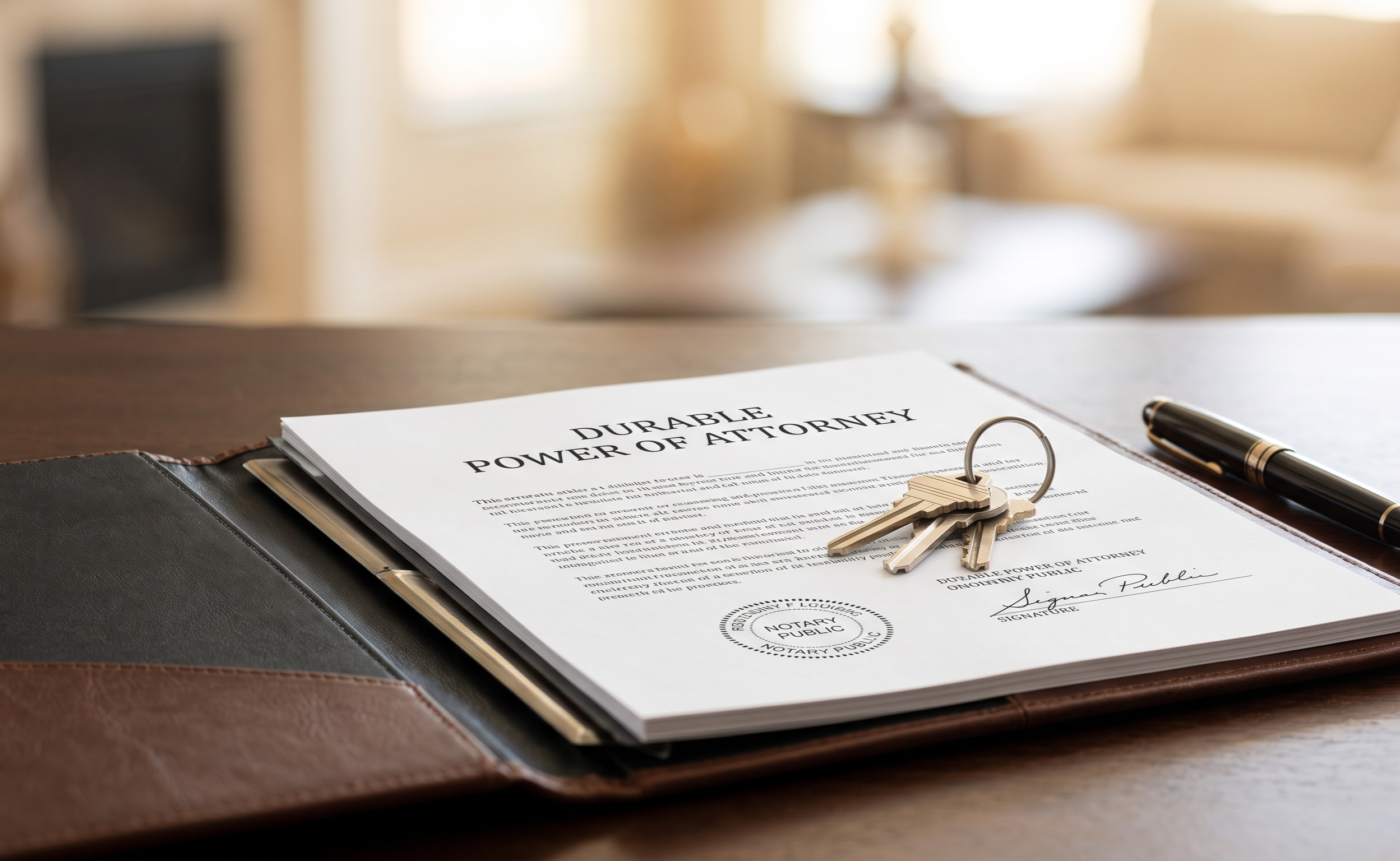
- A valid power of attorney can allow someone else to sell a house for the owner, but the document must give the agent authority over real property.
- A durable POA remains effective if the owner later becomes incapacitated. If capacity is already lost and no valid durable POA is in place, a Texas guardianship may be necessary.
- When a durable POA is used for a recordable real estate transaction in Texas, it must be recorded in the county where the property is located. Title companies may require review or recording earlier in the process.
- Send the POA to the title company early. They will confirm that it is still valid, gives enough authority to complete the sale, and meets their requirements for closing.
- A cash sale does not remove the POA or title requirements, but it does remove the lender’s separate approval process and financing risk. An experienced buyer knows how to help.
What type of power of attorney do you need to sell a house?
The main question is whether authority needs to continue if the owner becomes incapacitated.
Durable power of attorney. This stays in effect even if the principal later becomes unable to make decisions. It is usually the appropriate document when an adult child may need to handle a parent’s finances or real estate as health declines.
Non-durable power of attorney. This can authorize a real estate transaction while the principal still has capacity, but it ends if the principal becomes incapacitated. It may work for a limited situation, such as an owner who is unavailable to sign in person.
If the owner has already lost legal capacity and no valid durable POA is in place, they cannot create one at that point. In Texas, the next step may be a court-appointed guardianship, not a conservatorship.
What does a POA actually authorize in a real estate transaction?
The POA needs to give the agent authority to handle real property. In Texas, that authority can include listing the house, negotiating with buyers, signing a sales contract, executing the deed and closing documents, and handling other steps needed to complete the transaction.
The exact authority comes from the document itself, so do not assume that a general financial POA automatically covers a home sale. The title company will review the POA to confirm that the agent has enough authority to sign for the owner.
That authority also comes with responsibilities. An agent acting under a POA is a fiduciary and must act for the principal’s benefit, not use the authority to benefit themselves at the principal’s expense. Texas law specifically recognizes fiduciary duties for agents acting under durable powers of attorney.
If the agent wants to buy the property themselves, sell it to a related party, or otherwise enter a transaction that could benefit them personally, that is the point to get independent legal advice before moving forward.
How selling with power of attorney works in Texas
For a durable POA to be valid in Texas, it must be signed by the principal, acknowledged before an authorized officer such as a notary, and contain language showing that the authority continues despite the principal’s later incapacity.
When the POA is used to sign a deed or another instrument that will be recorded in the real property records, Texas law also requires the durable POA to be recorded with the county clerk where the property is located. The statute allows it to be recorded no later than 30 days after the related instrument is filed.
In practice, the title company may want the POA reviewed and recorded earlier. It will also confirm that the document gives the agent enough authority to handle the sale and may ask for additional documentation before it will insure the transaction.
What to do before you go under contract:
1. Confirm the POA is still valid and has not been revoked or expired.
2. Make sure it grants authority over real property transactions.
3. Send the POA to the title company early for review.
4. Ask what that title company requires for recording or any supporting affidavits.
5. Resolve any problems with the document before setting a closing date.
Can I sell my parents’ house with power of attorney?
Yes, if the POA is still valid and gives you authority over real property. Before you move forward, confirm:
- the POA was signed while your parent still had legal capacity
- it has not been revoked or expired
- it remains effective if your parent is now incapacitated
- it gives you authority to handle real estate
If your parent no longer has capacity and no valid durable POA is already in place, they cannot create one at that point. In Texas, the next step may be a court-appointed guardianship. TexasLawHelp notes that a POA can only be created by someone who understands what they are signing.
If you are unsure whether the document covers the sale, have the title company or a Texas attorney review it before you sign a contract.
What title companies require when you sell with POA
Even when the POA is legally valid, the title company still has to decide whether it is sufficient for the transaction they are being asked to insure. That review can uncover problems before closing, so send the POA to title as early as possible.
Depending on the company and the document, they may ask for:
the original POA or a recordable original
proof that it has been recorded in the county deed records
confirmation that the POA has not been revoked
confirmation that the principal is still living
clear authority for the agent to sell and convey the property
an affidavit or other supporting documentation
Requirements can vary by title company and by the POA itself. Do not wait until closing day to find out whether yours will be accepted. Have the title company review it before you commit to a closing timeline.
What a cash sale takes off your plate
A cash sale does not change the legal requirements of selling with power of attorney. The POA still has to be valid, the title company still has to approve it, and any recording requirements still have to be handled.
What a cash sale can remove is the lender from the process. In a financed sale, the lender may have its own POA requirements in addition to the title company’s review. A direct cash sale avoids that extra layer of approval and the risk of financing delays tied to the document. Texas title guidance specifically notes that lenders can impose requirements beyond state law when a POA is used.
With an experienced buyer, you may also have help coordinating the title company, county records, and closing documents so you are not managing every step on your own.
Big State buys in Houston and DFW. We handle that coordination and can buy the house as-is, whether you are nearby or managing the sale from somewhere else.
TALK TO US
When you’re ready to talk, start here.
You don't have to have everything figured out before you call. If you're in Houston or DFW and want to know what a cash sale looks like for you, let's talk.
You're not committing to anything. You're just getting clarity.
or call888-981-9143
Questions sellers ask about POA
Yes. A POA is only valid during the principal’s lifetime. In Texas, the authority ends when the principal dies. After that, the property has to be handled through the estate rather than under the POA.